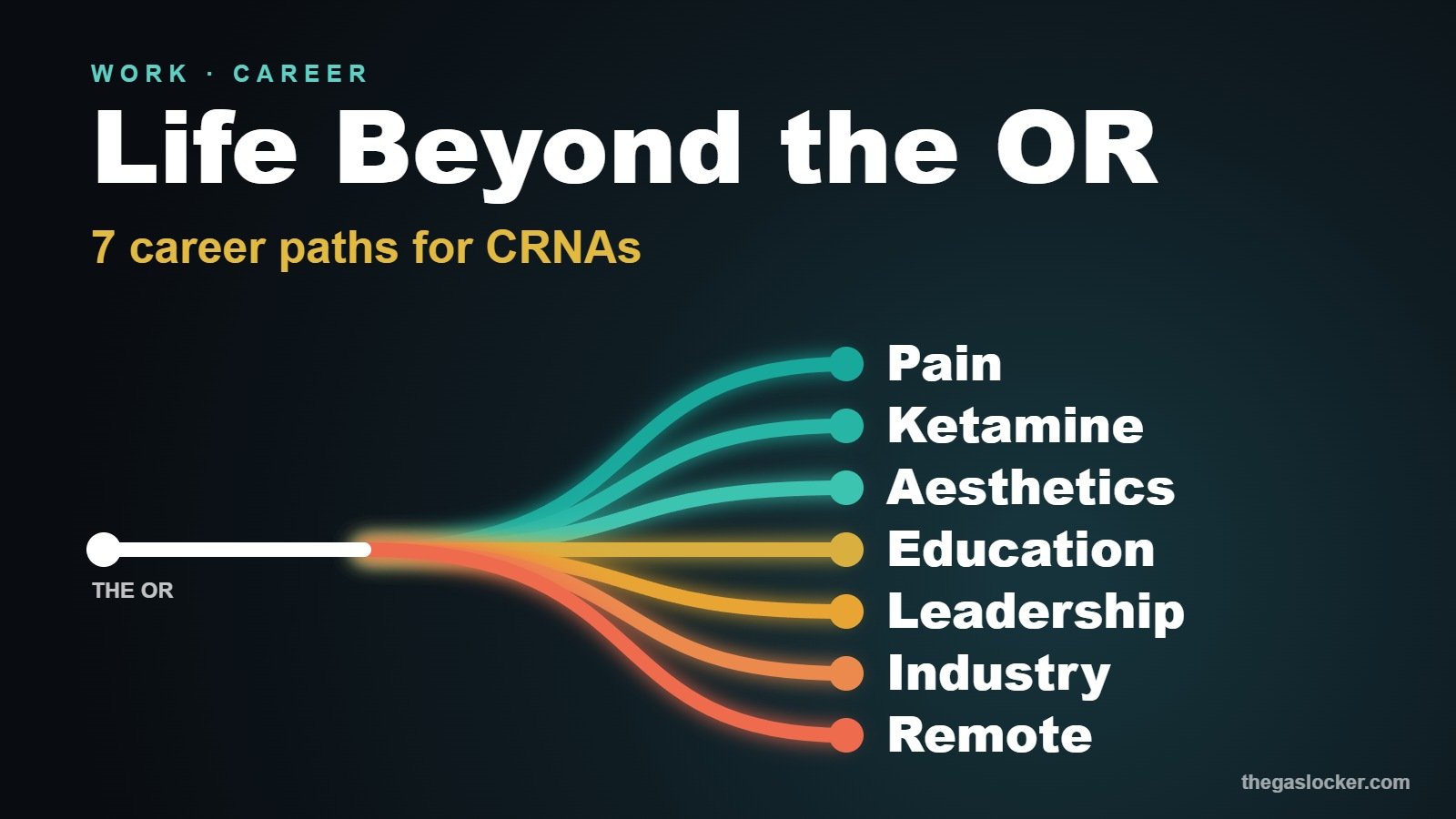
Some days the OR is exactly where you want to be. Other days it’s the 5 a.m. alarm, the add-on at 6 p.m., and the fourth lap chole before lunch. If you’ve ever wondered what else a CRNA can do, you’re not alone. In a 2022 AANA Journal study done during the COVID-19 surges, nearly 4 in 10 CRNAs met the clinical criteria for burnout, and another 40% reported feeling disengaged.
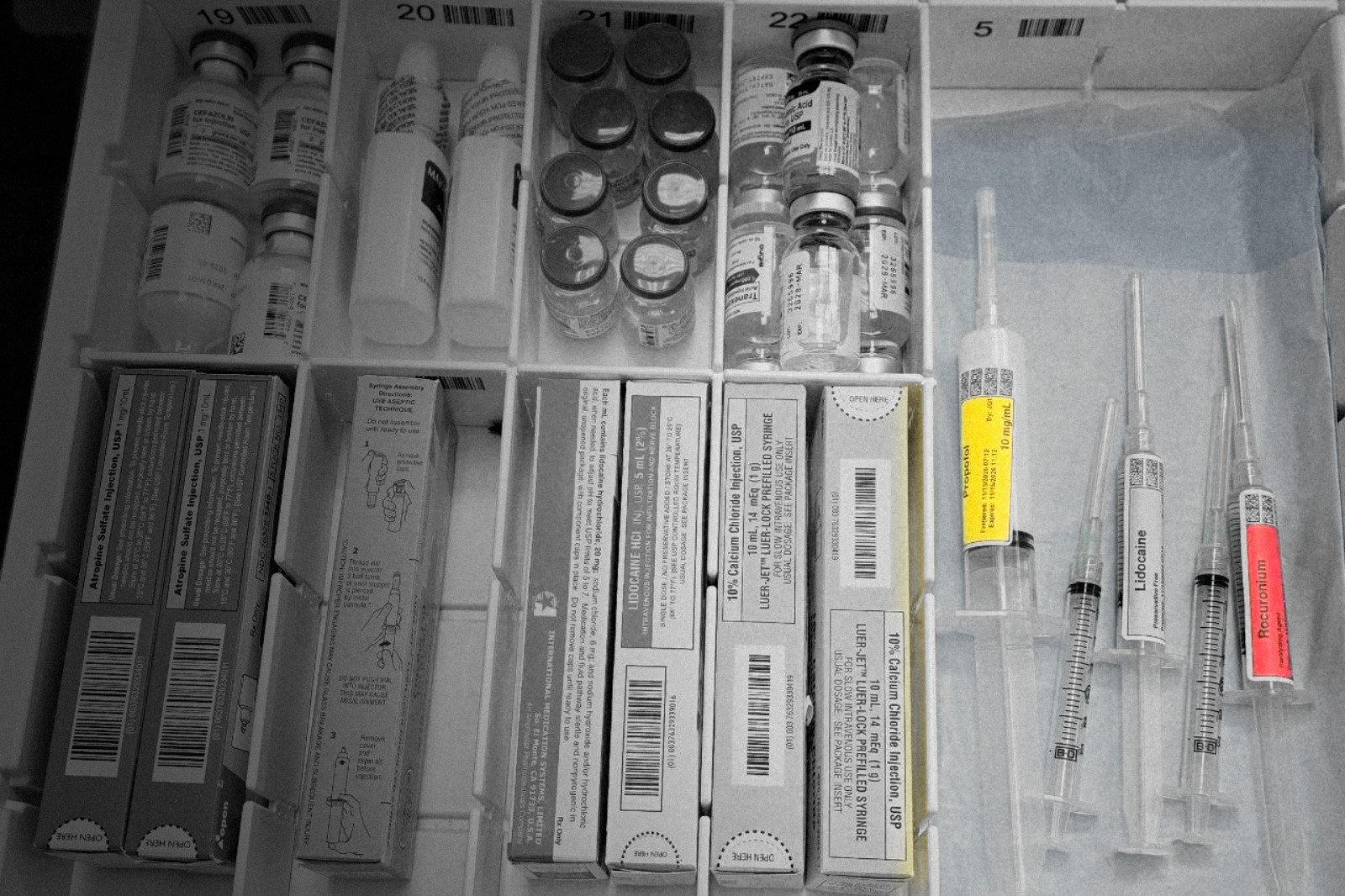
The good news: the skills you use every day travel well. Airway judgment, pharmacology, calm under pressure, and the ability to sedate someone safely are worth a lot outside the main OR. Below you’ll find the easiest move first (staying in anesthesia but leaving the main OR), then seven paths CRNAs are taking, what each one really involves, and what to check before you jump.
The short answer
You may not need to leave anesthesia at all. More and more cases happen outside the main OR, in GI suites, dental and surgery offices, and radiology, often on weekday schedules. If you want something different altogether, CRNAs are moving into chronic pain, ketamine and infusion clinics, aesthetics, teaching, industry, leadership, and telehealth, consulting or legal work. Rules vary a lot by state, and some paths pay less than clinical work. Most people test a new path part-time first and keep their clinical skills current.
All the options at a glance
The map
How far from the OR?
Every path, from still doing anesthesia to fully remote.
General information. Scope of practice varies by state.
First stop: anesthesia outside the main OR
If what’s wearing you down is the main OR (the call, the add-ons, the long cases), you may not need to leave anesthesia at all.
What it looks like. GI suites and endoscopy centers, dental and oral surgery offices, plastic surgery offices, and radiology or cath lab cases. Mostly sedation and short anesthetics, high volume, and a predictable day. Many GI and office-based jobs are posted as weekday, no-call positions.
The demand. This work keeps growing. A study in Anesthesia & Analgesia found that the share of U.S. anesthesia cases done outside the operating room rose from just over 1 in 4 in 2010 to more than 1 in 3 in 2014, with colonoscopy the most common case. A 2024 American Hospital Association report says these cases are expected to make up more than half of all anesthesia within the next decade.
What you need. Nothing new on paper. You already have the skills. What matters is speed, smooth sedation, and comfort working with less backup.
Watch out for. Fewer hands nearby. Offices and procedure rooms can be far from help and supplies, which is why the Anesthesia Patient Safety Foundation treats out-of-OR anesthesia as its own safety topic. Know the emergency plan, the equipment, and who comes when you call. The pace can also feel repetitive.
Best for: CRNAs who still love anesthesia but want their evenings, weekends and sleep back.
1. Chronic pain management
This is the path that keeps you closest to what you already do: needles, landmarks, ultrasound and pharmacology, with patients who come back and get better.
“There’s nothing more rewarding than treating somebody who has been in pain for years and finally seeing them get better.”
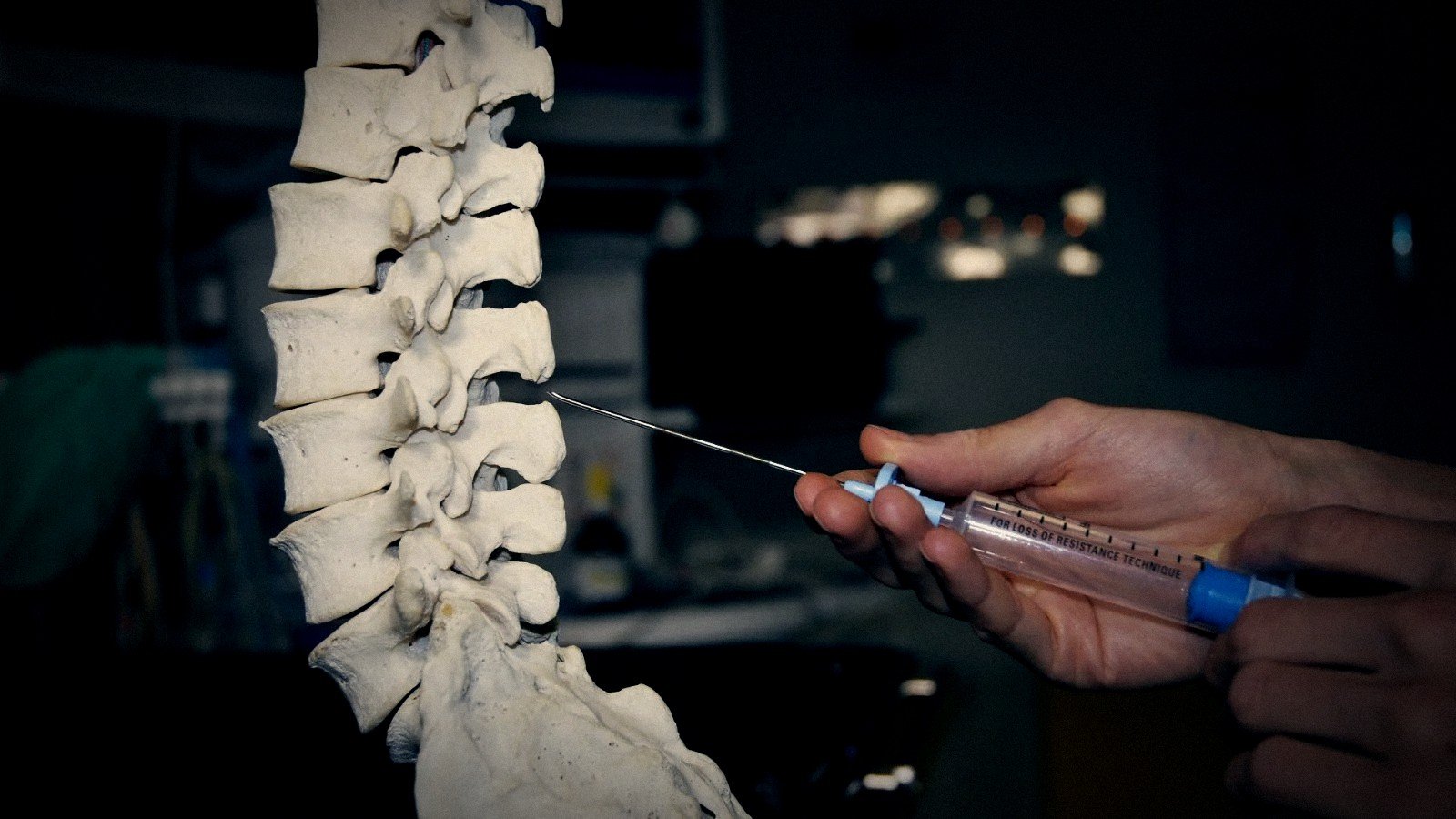
What it looks like. Clinic days instead of OR days. Epidural steroid injections, nerve blocks, joint injections and medication plans for patients with long-term pain. Many pain clinics run on a predictable weekday schedule with no call.
What you need. Advanced regional and interventional skills, usually built through a post-graduate pain fellowship. The NBCRNA offers a subspecialty credential, Nonsurgical Pain Management (NSPM-C). Starting January 1, 2027, you’ll need a COA-accredited pain fellowship to sit for that exam.
The opening. CRNAs have barely tapped this field. A federal GAO review found CRNAs billed Medicare for just 0.3% of selected chronic pain procedures in 2012. Since 2013, Medicare has covered CRNA pain services wherever state law allows them.
Watch out for. State scope is the whole ballgame. When GAO looked, 19 states allowed payment for all the pain procedures it checked, 30 states and DC allowed only some, and one allowed none. Physician groups also push back on CRNA pain practice in many states. Check your state board and your malpractice coverage before you build a career on it.
Best for: CRNAs who love regional, want daytime hours, and like seeing patients improve over months.
2. Ketamine and infusion clinics
Ketamine clinics treat depression, PTSD and chronic pain with low-dose infusions, and anesthesia providers are a natural fit to run them.
“I’ve seen a lot of change even after two or three treatments. It’s very fulfilling.”
What it looks like. A calm outpatient room, a monitored infusion, and a patient who’s awake. You assess, run and monitor the infusion, and manage side effects. Many CRNAs work in these clinics, and some own them. The Texas Tribune reported in 2026 that APRNs and CRNAs administer most ketamine treatments in Texas clinics.
What you need. Your sedation and airway skills, plus mental health training and a working relationship with psychiatric providers. A joint position from the AANA and the American Psychiatric Nurses Association is clear: a CRNA should not give an infusion for a psychiatric condition without a diagnosis from a qualified mental health professional.
Watch out for. Regulators are catching up fast.
- Ketamine is a Schedule III controlled substance, so clinics need DEA registration and tight storage and records.
- Texas spent 2026 drafting its first ketamine clinic rules. The August draft would require clinics to register and name a medical director, limit staff to four patients at once, and ban at-home ketamine. It was still a proposal at that point.
- Many states restrict who can own a medical practice, so the business structure needs a health care attorney.
- IV ketamine for depression is used off-label, which raises the bar for informed consent.
Best for: CRNAs who want deeper patient relationships, have an entrepreneurial streak, and the patience to build a compliant business.
3. Aesthetics
You already know injection technique, anatomy and sterile practice, which is why many CRNAs eye the med spa world.
“As CRNAs, we’re well-versed in anatomy, physiology and pharmacology.”
What it looks like. Neuromodulator and filler injections, consults and repeat clients, often with evening or weekend hours that fit around a clinical job.
What you need. Dedicated injector training, and a clear answer from your state board on whether cosmetic injections fall within your CRNA scope. That answer is not the same everywhere.
Watch out for. This is the path with the most legal gray area.
- Many states treat cosmetic injections as the practice of medicine or advanced nursing, with rules about who must examine the patient first and who must supervise.
- South Carolina, for example, has APRNs inject under a written protocol with a supervising physician or dentist, after a bona fide patient relationship is set up.
- Your CRNA certification is built around anesthesia. Don’t assume it covers aesthetics. Ask your board in writing, and make sure your malpractice policy covers it.
Best for: CRNAs with an eye for detail, an interest in business, and the patience to sort out the rules first.
4. Education
Every CRNA remembers the instructor who made it click. Teaching is how you become that person for the next class.
“What better way to ensure the future of your profession than to help prepare and train future CRNAs?”
What it looks like. Lectures, simulation labs, clinical coordination, research, and advising students. Many faculty keep one or two clinical days a week to stay sharp. Program director and assistant director roles add accreditation work and running the program.
The demand. All new CRNAs now graduate with a doctorate, and programs keep opening, so schools need doctorally prepared faculty. Leadership turns over often, too: in 2023, about 1 in 7 nurse anesthesia program administrators left their role, up from 1 in 10 in 2020, based on Council on Accreditation data reported in the Journal of Nurse Anesthesia Education.
What you need. A doctorate (DNP or DNAP) for most faculty roles, and a real interest in teaching. Experience precepting students is a strong start.
Watch out for. Pay. A 2025 article in the Journal of Nurse Anesthesia Education named the gap between clinical and academic pay as the most persistent reason nurse anesthesia faculty leave. Most educators make it work by combining teaching with clinical shifts.
Best for: CRNAs who light up when precepting, and who want to shape the profession.
5. Industry and medical devices
The companies that make anesthesia machines, monitors, nerve block devices and drugs need people who can talk to clinicians as peers.
What it looks like. Clinical specialist roles: you train hospital staff on new equipment, support cases, run demos and answer clinical questions for the sales team. Other paths include medical education and medical affairs for drug companies.
What you need. Deep clinical credibility, comfort teaching, and a tolerance for the road. A 2025 Getinge posting for an anesthesia clinical specialist asked for at least three years of anesthesia or respiratory experience and listed travel of up to 80%. GE HealthCare posts similar clinical applications roles. Many of these postings are written with respiratory therapists in mind, so lead with your teaching and equipment experience, not just your clinical résumé.
Watch out for. Travel, sales targets, and drifting away from hands-on skills. If you might return to the OR, plan how you’ll stay current.
Best for: CRNAs who love technology, like teaching peers, and don’t mind living out of a suitcase.
6. Leadership and business
Someone has to run the schedule, the budget, the quality program and the group. More and more, that someone is a CRNA.
What it looks like.
- Chief CRNA or anesthesia director: staffing, scheduling, policies and quality.
- Surgery center leadership: running operations at an ASC, where anesthesia drives the whole day. Jesse Johnson, a CRNA in Springdale, Arkansas, told Becker’s ASC in 2025 that most surgery centers in his area are becoming CRNA-only.
- Practice owner: building your own anesthesia group, often contracting with surgery centers and offices. In a 2025 Medicus Healthcare Solutions white paper, 75% of CRNAs reported practicing without physician collaboration as of 2023, which is the opening for CRNA-owned groups in many states.
What you need. People skills, comfort with numbers, and often an MBA or MHA. Owners also need contracts, insurance, billing and credentialing figured out.
Watch out for. Meetings replace cases. Owners carry the risk when a contract ends or payment drops, and payment rates can change from year to year.
Best for: CRNAs who already end up fixing the schedule, and who like building things.
7. Telehealth, consulting and legal work
This is the path that can take you fully out of scrubs.
Telehealth. Pre-anesthesia visits by phone or video are now common. In a 2022 survey of VA anesthesia services, published in Federal Practitioner, 38 of the 50 services that responded used phone or video for some pre-anesthesia visits, and only 12 still did every visit in person. Whether a CRNA can do these visits depends on the facility and the state.
Legal work. Attorneys need anesthesia experts to review cases. CRNAs work as expert witnesses and legal nurse consultants, reviewing records and explaining the standard of care. Expert directories such as Expert Institute and SEAK list CRNA experts by state.
“This is a way to bridge the gap between law and medicine.”
Consulting and building. CRNAs advise surgery centers on anesthesia programs, staffing and quality, and some build tools for other CRNAs. (That’s how our own GasRate app started.)
What you need. Credibility, clear writing, and for legal work, recent clinical experience. Many states set rules on who can testify. Arizona, for example, requires an expert to have spent most of their professional time in the year before the case in active clinical practice or teaching in the same profession.
Best for: CRNAs who want flexibility, part-time income, or a bridge to something new.
Which path fits you?
Start with what is wearing you down, not with the job title.
How to land your first role off the main OR
Where these jobs get posted
- Outside-the-OR anesthesia and pain: your state association’s job board, the AANA Career Center, staffing agencies, and GI, dental or surgery group websites.
- Education: nurse anesthesia program websites and university job boards. Programs often hire their own graduates and preceptors first.
- Industry: company career pages (GE HealthCare, Getinge, Dräger and others) and LinkedIn. Search “clinical specialist anesthesia” or “clinical applications specialist.”
- Legal: expert witness directories and legal nurse consultant groups.
What to put on your résumé
- Your case mix and volume: blocks, sedation, pediatrics, cardiac, whatever fits the role.
- Teaching: students you’ve precepted and in-services you’ve led.
- Projects: quality improvement, new protocols, committee work.
- Anything business: scheduling, staffing, billing, running a group.
Who to call first
- The program director where you trained, for teaching jobs and fellowships.
- A CRNA already doing the job. Your state association can often connect you.
- The device rep you already know from your OR. They usually know who’s hiring.
Test the waters before you jump
You don’t have to quit to find out. Most CRNAs who switch paths start with a toe in the water.
- Go part-time first. Pick up one day a week at a pain clinic, an infusion clinic or a school, and keep your main job.
- Check your state rules. Scope for pain, ketamine and aesthetics depends on your state and your facility. Your state board of nursing has the final word.
- Keep your certification current. NBCRNA’s continued certification runs on 4-year cycles. Staying in some clinical practice keeps your options open.
- Keep your skills warm. If you step far from the OR, plan how you would come back: per diem shifts, simulation, refresher courses.
Changing jobs? Your retirement money comes with you. Here’s what to do with it.
The bottom line
Burnout is real in this profession, and the OR is not the only place a CRNA’s skills matter. Weekday anesthesia outside the main OR, pain management, infusion clinics, aesthetics, teaching, industry, leadership and consulting all need people who understand airways, drugs and patient safety.
Each path trades something: income, patient contact, stability or travel. The right one depends on what you’re trying to get away from and what you’re trying to get to. Start small, stay certified, and let your clinical work carry you into the next chapter.
FAQ
Can I leave the OR without leaving anesthesia?
Yes. GI suites, dental and oral surgery offices, plastic surgery offices and radiology all need anesthesia, and many of these jobs run on weekday schedules with no call.
Can CRNAs work in chronic pain management?
Yes, depending on the state and facility. NBCRNA offers the Nonsurgical Pain Management (NSPM-C) credential for CRNAs who want formal recognition in pain care.
Can CRNAs give ketamine infusions for depression or pain?
Many do. The AANA and the American Psychiatric Nurses Association have a joint position statement on it, and state nursing boards set the specific rules, so check yours first.
Can CRNAs inject Botox and fillers?
In some states, yes. Rules on who can inject, who must supervise, and who must examine the patient first vary widely. Your state board of nursing has the final word.
Do I need a doctorate to teach?
For most faculty roles in nurse anesthesia programs, yes.
Will I lose my CRNA certification if I leave clinical practice?
Not automatically. Read NBCRNA’s current continued certification requirements before you step away, and keep your state license active.
Can I do more than one path at once?
Yes, and many CRNAs do. A common mix is clinical shifts plus teaching, legal review or a clinic day.
Go deeper: the hands-on guides
Pain, ketamine and aesthetics each have their own step-by-step guide, with training programs and checklists.
Sources
- CRNA School Prep Academy: Megan Hagley on starting a med spa
- CRNA School Prep Academy: Kristen Hull on expert witness work
- AANA on burnout (2022 AANA Journal study)
- Anesthesia & Analgesia on non-OR anesthesia growth
- AHA, 2024
- APSF on non-OR safety
- NBCRNA NSPM
- GAO-14-153
- AANA/APNA ketamine statement
- Texas Tribune, 2026
- Texas Dispatch, Aug 2026
- South Carolina neuromodulator guidelines
- Journal of Nurse Anesthesia Education, 2025
- Getinge posting, 2025
- Becker’s ASC on the Medicus report
- Becker’s ASC on CRNA-only ASCs
- Federal Practitioner, 2023
- Arizona A.R.S. 12-2604
- NBCRNA continued certification
General information, not legal, career or financial advice. Scope of practice depends on your state, your facility and your payers; check with your state board of nursing before taking on a new role. Some images are AI-generated via Google Gemini. No affiliate links.