
Night shift has its own uniform. Scrubs, a warm bouffant, a coffee you forgot about two cases ago, and, in a lot of ORs, a pair of Crocs.
I’m one of those people. I wear Crocs on my night shifts, and I switch to my Brooks Ghost running shoes for long day shifts. There’s a good reason for both, and it comes down to what happens to your feet somewhere around hour ten.
The short answer
Yes, Crocs can be comfortable for a 12-hour shift, with two catches. Pick a pair without holes over the top of the foot, and check your hospital’s footwear rules first. If your day means miles of walking or you need real arch support, a running shoe may still win.
Why they feel so good at hour one
Slip on a pair of Crocs and the first thing you notice is how light they are. The clogs are fully molded, soft underfoot, and they wipe clean with soap and water. Kick them off in the call room, slide them back on when the next case is called. Easy.
Crocs also makes a separate work line built for jobs like ours. Those styles add an enclosed toe with a thicker top over the forefoot for spill protection, plus a slip-resistant tread (Walmart listing for Crocs Specialist II).
And why they can ache by hour ten
Here’s the honest part. That soft, easy feeling doesn’t always last a full shift. A few reasons:
- Support: the footbed is soft, but it isn’t built like a supportive running shoe. If you already use inserts or deal with foot pain, try them on a short day first.
- Fit: clogs are roomy on purpose. If your heel lifts with every step, your feet work harder all night.
- Distance: a shift full of walks between rooms, floors or buildings is where a cushioned running shoe pulls ahead. Our guide to the best shoes for 12-hour OR shifts covers the options.
- Heat: closed styles trap more warmth than the vented classic pair. Good socks make a real difference here.
Are Crocs allowed in the OR?

It depends on where you work, and the holes are usually the deal-breaker.
The Ontario Hospital Association once warned more than 100 hospitals that the ventilation holes could let blood or body fluids reach the skin, and that a dropped needle could slip right through. Several hospitals in Canada and the U.S. restricted vented Crocs after that, and some also flagged open heels (CTV News).
AORN, the perioperative nursing association, keeps it simple: wear “protective footwear that meets your health care organization’s safety requirements and operating room dress code,” and add fluid-resistant shoe covers or boots when you expect a mess (AORN).
My facility is a good example. Shoes with bigger holes aren’t allowed, period. So before you buy, take two minutes to check your own dress code.
Which Crocs work for a 12-hour OR shift?
If you’re shopping, start with the work line. Crocs says those shoes use a slip-resistant tread it calls Crocs Lock and are also made for health care workers (Crocs work shoes).
Specialist II
VariesWork clog with a thicker top over the forefoot. The best match for most dress codes.
On-The-Clock LiteRide
$49.99Low work slip-on from the work line. The lighter, sneaker-like option.
Bistro Pro LiteRide
Check listingWork clog from the work line. Check the top for vents before you buy.
Classic Crafted Canvas & Suede
VariesThe pair I wear on nights: the classic Crocs base with a closed canvas top, so my toes and socks stay covered and it fits my facility’s rules. It’s sold as a casual shoe, not part of the work line.
Classic clog
VariesThe original vented clog. Often not allowed in the OR.
My take
Crocs are my night-shift shoe. No holes up top, easy on and off, and they keep my toes and socks protected.
They’re comfortable for most of the night. After about 10 to 12 hours, though, my feet start to ache. That’s exactly why my Brooks Ghosts come out for long day shifts.
If you’re deciding: Crocs are a great fit for nights. For a long, busy day, a supportive running shoe may treat your feet better.
Six ways to make clogs last 12 hours
- Check the dress code first. Holes, open heels and slip resistance are the usual questions.
- Start with the work line. An enclosed toe and a slip-resistant tread matter more in the OR than color or charms.
- Size for your heel. If it lifts with every step, try a half size down or a snugger style.
- Lean on your socks. Clogs don’t hug the foot, so your socks do more of the work. Our compression socks guide is a good place to start.
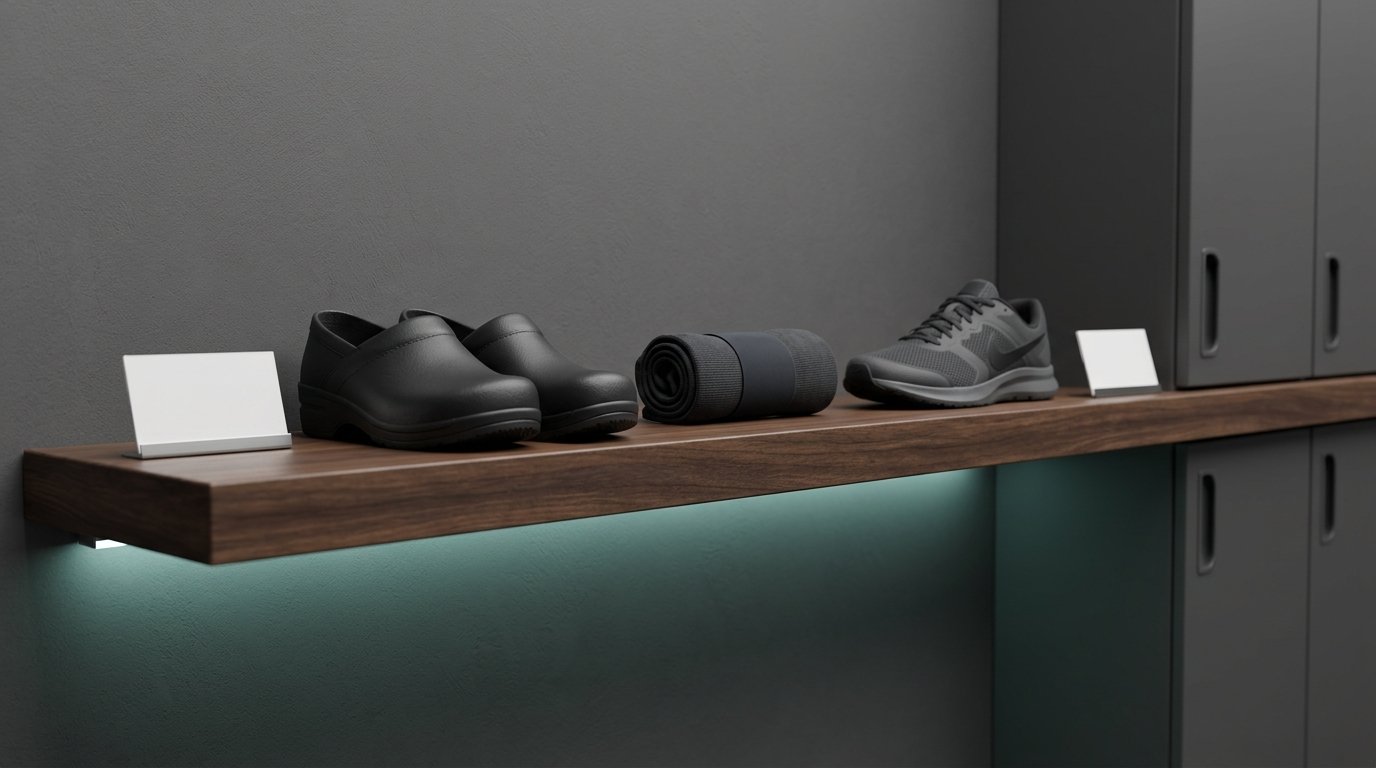
- Keep sneakers in your locker. For the long walking days, you’ll be glad they’re there.
- Wipe them down after every shift. Molded work clogs clean up with soap and water and dry fast.
FAQ
Are Crocs comfortable for 12-hour shifts?
For a lot of people, yes. They’re light and soft underfoot. Choose a pair without holes over the foot, and if you need arch support or walk long distances, test them on a shorter shift first.
Can nurses and CRNAs wear Crocs in the hospital?
Often, but not always. Some hospitals restrict vented clogs because fluids can reach the skin and sharps can fall through the holes. Closed-toe work clogs are more likely to meet a dress code. Check your facility’s policy.
Which Crocs are best for the OR?
A closed, slip-resistant work clog, such as the Specialist II with its enclosed toe. The vented classic clog is the one most likely to be restricted.
Are Crocs slip-resistant?
The work line uses a slip-resistant tread Crocs calls Crocs Lock. The classic and casual styles aren’t part of the work line.
Crocs or sneakers for a long shift?
It depends on your feet and your day. Clogs are easy on and off and simple to clean. Supportive running shoes usually do better on long walking days or if you need arch support.
Sources
Not medical advice. If you have foot pain, talk with your physician or a podiatrist. No affiliate links; no brand paid for or reviewed this post. Prices checked October 2026 and may change. Cover and images: AI-generated via Google Gemini.