Intermittent fasting works, but mostly for a less glamorous reason than social media suggests. In randomized trials, it produces weight loss and metabolic improvements that are roughly equal to ordinary calorie restriction, not dramatically better. Its real advantage is practical: one rule (when to eat) replaces dozens of daily food decisions.
For people working 12-hour shifts and call nights, that simplicity is the point. This article covers how fasting works physiologically, what the major trials found, where the evidence is weak, what changes for shift workers, and who should not try it.
Key takeaways
- In trials, intermittent fasting works about as well as ordinary calorie restriction. Its real advantage is simplicity.
- A 16:8 schedule mostly means lower insulin and fewer calories, not deep ketosis.
- For shift workers, a steady 10-hour eating window helped firefighters on 24-hour shifts.
- Protect lean mass with protein and strength training, and talk to your doctor first, especially if you take glucose-lowering drugs.
Last reviewed Oct 2026 · Written by a practicing CRNA

What intermittent fasting is
Intermittent fasting is an umbrella term for eating patterns that alternate eating periods with planned periods of little or no food. It changes when you eat; the diet itself can be anything. The four approaches most often studied:
| Approach | How it works | Evidence base |
|---|---|---|
| Time-restricted eating (TRE), e.g. 16:8 | Eat within a daily window, usually 6–10 hours; fast the rest | Most popular; many short trials, mixed results on weight |
| Early TRE (eTRE) | A TRE window that ends by mid-afternoon, such as 7 a.m.–3 p.m. | Small trials suggest extra metabolic benefit from eating earlier |
| 5:2 | Eat normally 5 days; about 500–600 kcal on 2 non-consecutive days | Among the more consistent weight-loss results |
| Modified alternate-day fasting (MADF) | Alternate normal days with very-low-calorie days | Strongest evidence for short-term weight loss |
Most clinicians who fast use TRE, because it fits around a work schedule without counting calories.
The physiology: what happens when you stop eating
The core idea behind fasting is the metabolic switch: the shift from running mainly on glucose to running mainly on fatty acids and ketones. Anton and colleagues, writing in Obesity, place that switch between 12 and 36 hours after the last meal, depending on how full liver glycogen stores were at the start.
In simplified order, a fast moves through these stages:
- Fed state (first few hours). Insulin is elevated, glucose is the main fuel, and excess energy is stored as glycogen and fat.
- Post-absorptive state. Insulin falls and the liver releases glucose from glycogen to keep blood sugar stable.
- Glycogen depletion. As liver glycogen runs low, lipolysis accelerates and free fatty acids become the main fuel.
- Ketogenesis. The liver converts fatty acids to β-hydroxybutyrate and acetoacetate, which fuel muscle and brain.
A practical implication: a typical 16:8 schedule (about 16 hours without food) reaches the early edge of that switch at best. Most of what happens on 16:8 is lower insulin exposure and fewer calories, not deep ketosis.
Researchers propose several mechanisms beyond calorie reduction, including improved insulin sensitivity, lower oxidative stress and better alignment with circadian rhythms. Much of the cellular-pathway evidence (autophagy, mitochondrial biogenesis, stress resistance) comes from animal studies, and how much applies to humans at realistic fasting lengths is still uncertain.
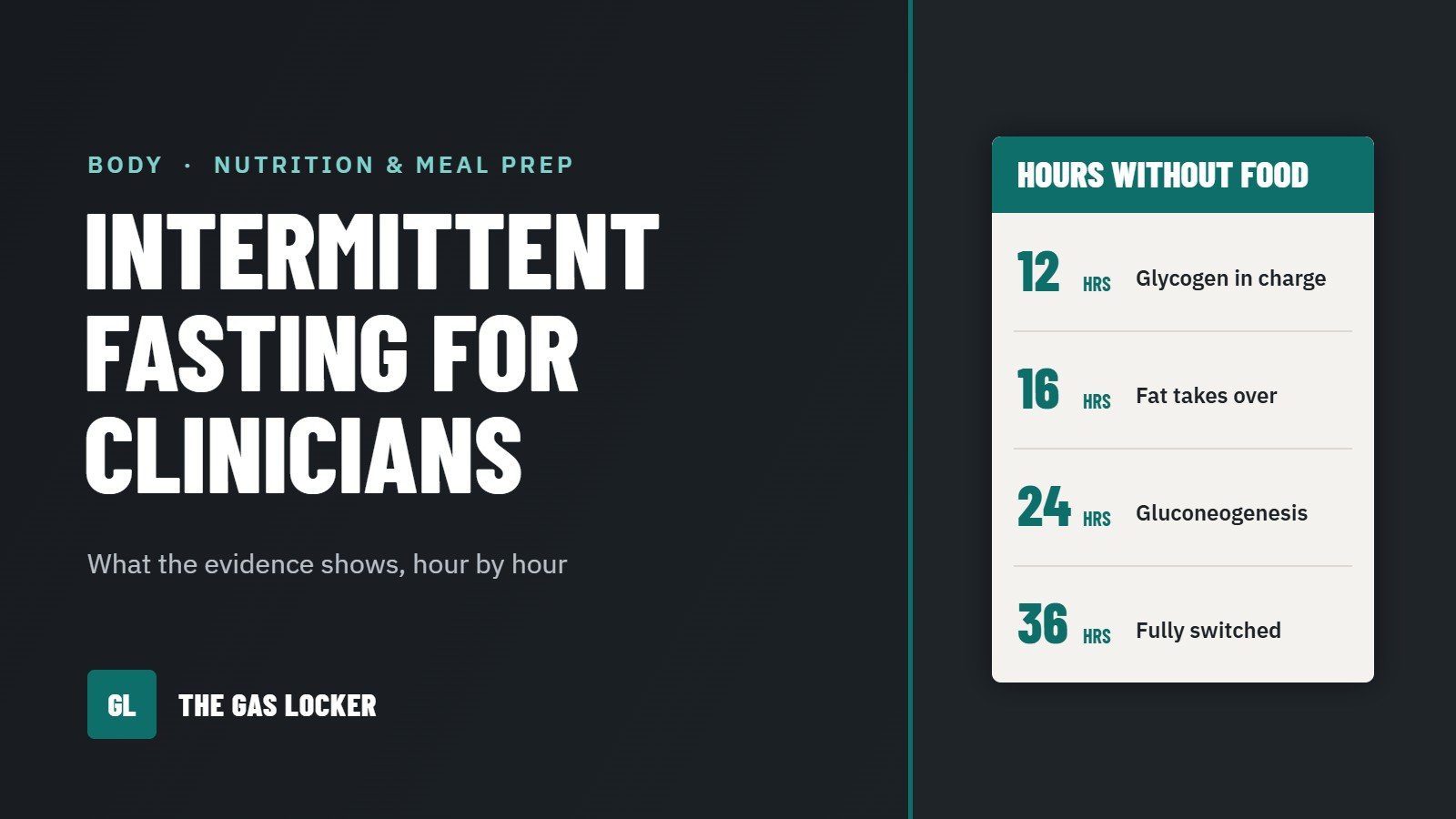
What happens at 12, 16, 24 and 36 hours
Your body without food: hour by hour
Hours since your last meal. Timing varies with how full your glycogen stores were and how active you are.
About 21 h: average time to reach 0.5 mmol/L ketones (about 17.5 h if you exercise at the start)
12hours
Glycogen still in charge
- Insulin has settled to fasting levels.
- Liver glycogen is still the main glucose source; it falls by about a third by hour 15.
- Fat burning is rising. Ketones are still low.
For you A normal overnight fast: dinner at 7 p.m., breakfast at 7 a.m. (12:12).
16hours
Fat takes over
- Glycogen is running down.
- Fat is becoming the main fuel.
- Ketones are usually still under 0.5 mmol/L; exercise early in the fast gets you there by about 17.5 h.
For you Where most 16:8 schedules end. Mostly lower insulin and fewer calories, not deep ketosis.
24hours
Making your own glucose
- About 64% of glucose now comes from gluconeogenesis (measured at about 22 h).
- Most people have passed 0.5 mmol/L ketones (average about 21 h).
- Hypoglycemia risk is real on insulin or sulfonylureas.
For you A full-day fast. Hard to do well on a long OR shift.
36hours
Fully switched
- The end of the metabolic switch window.
- Fatty acids and ketones are the main fuels.
- Gluconeogenesis keeps climbing, toward 96% of glucose by days 2–3.
For you About the length of an alternate-day fast. Skip it on work days.
Sources: Rothman et al. via Endocrine Society review; MSSE 2021, 36-hour fasting study; Anton et al., Obesity 2017.
Three measurements anchor this timeline. Using 13C NMR, Rothman and colleagues found that liver glycogen fell about a third between 4 and 15 hours after a meal, and that gluconeogenesis supplied about 64% of glucose by 22 hours, rising to 96% by 46–64 hours (Endocrine Society review). In a 2021 trial of 36-hour fasts, participants reached 0.5 mmol/L β-hydroxybutyrate at about 21 hours on average, or about 17.5 hours when they exercised at the start of the fast (Medicine & Science in Sports & Exercise).
For OR staff, that last finding is useful: an early workout before a day shift, as in a 5 a.m. gym session, may move the fat-burning shift earlier in the day.
What the evidence shows
The best-supported benefits are modest weight loss, better insulin sensitivity and lower blood pressure, and timing (eating earlier) may matter as much as the fasting itself. These are the trials worth knowing:
| Study | Who and how | Main finding |
|---|---|---|
| Sutton et al., Cell Metabolism, 2018 | Small crossover feeding trial in men with prediabetes; 6-hour window ending before 3 p.m. vs 12 hours, 5 weeks each, weight held constant | Improved insulin sensitivity, β-cell responsiveness, blood pressure, oxidative stress and appetite without weight loss |
| TREAT, Lowe et al., JAMA Internal Medicine, 2020 | 116 adults with overweight or obesity; 16:8 (noon–8 p.m.) vs 3 structured meals, 12 weeks | −0.94 kg vs −0.68 kg; difference not significant (P=.63). Greater lean-mass loss in the TRE group |
| Liu et al., NEJM, 2022 | 139 adults with obesity; calorie restriction with an 8 a.m.–4 p.m. window vs calorie restriction alone, 12 months | −8.0 kg vs −6.3 kg; difference −1.8 kg (95% CI −4.0 to 0.4), not significant |
| Jamshed et al., JAMA Internal Medicine, 2022 | 90 adults with obesity; early TRE (7 a.m.–3 p.m.) plus calorie restriction vs ≥12-hour window plus calorie restriction, 14 weeks | 2.3 kg more weight loss (P=.002) and 4 mm Hg lower diastolic BP with early TRE; body fat difference not significant |
| Patikorn et al., JAMA Network Open, 2021 | Umbrella review of 11 meta-analyses covering 130 RCTs | Improvements in weight, fat mass, cholesterol, glucose and BP; only MADF and 5:2 produced >5% weight loss; most evidence low certainty; fat-free mass also fell |
Two patterns stand out. First, when calories are matched, fasting rarely beats ordinary calorie restriction on weight. Second, the trials that eat earlier in the day (Sutton, Jamshed) show the clearest metabolic signal, consistent with better alignment to the body clock.
Where the evidence falls short
Three caveats matter for anyone recommending or practicing fasting.
It is not clearly better than calorie restriction. In the 12-month Liu trial, adding an eating window to calorie restriction did not significantly improve weight loss. Most of fasting’s effect appears to come from eating less, which is fine, but it is not a metabolic shortcut.
Lean mass can suffer. In TREAT, about two-thirds of the weight lost was lean mass, and appendicular lean mass fell significantly more in the fasting group. The Patikorn umbrella review also found fasting associated with lower fat-free mass. Adequate protein and resistance training are the obvious countermeasures, though trials have not settled how well they offset the loss.
Long-term outcomes are unknown. Most trials last weeks to a year and measure surrogate markers, not heart attacks or deaths. In 2024, an American Heart Association conference abstract using NHANES data from about 20,000 adults linked an eating window under 8 hours to a 91% higher risk of cardiovascular death. It was observational, relied on two days of self-reported diet, and was not peer reviewed, so it cannot show that fasting causes harm. It is still a reason for humility until longer trials report.
Intermittent fasting and shift work
Shift workers may be the group with the most to gain from a defined eating window. Night and call shifts push eating into the biological night, when glucose tolerance is poorer, and they often stretch the eating day to 15 or more hours of grazing.
The most relevant trial for clinicians is the Healthy Heroes study from the Salk Institute and UC San Diego, published in Cell Metabolism in 2022. It randomized 150 San Diego firefighters working 24-hour shifts to a 10-hour eating window or a 14-hour window for 3 months, with both groups encouraged to follow a Mediterranean diet.
- The 10-hour group saw smaller VLDL cholesterol particle size, a marker linked to cardiovascular risk.
- Participants with elevated blood pressure or blood sugar at baseline saw significant improvements.
- Alcohol intake fell by about three drinks a week, and mental health measures improved.
- The schedule was feasible on 24-hour shifts, with no adverse effects reported.
The practical lesson for OR staff is that the window does not need to be extreme. A consistent 10-hour window, kept as steady as possible across day and night shifts, captured meaningful benefits in a population with schedules much like ours.
Who should not fast, and medication cautions
Johns Hopkins Medicine advises against intermittent fasting for:
- Children and teens under 18
- People who are pregnant or breastfeeding
- People with type 1 diabetes who take insulin
- Anyone with a history of eating disorders
It also recommends talking to a doctor first for anyone with a chronic condition or on regular medication.
For people with diabetes, the Cleveland Clinic Journal of Medicine outlines how risk varies by drug class:
| Drug class | Hypoglycemia risk while fasting | Key consideration |
|---|---|---|
| Insulin | High | Mealtime insulin should follow actual meals; premixed insulin is hard to adjust. Basal doses may need review |
| Sulfonylureas | High | Dose reduction or shifting the larger dose to the evening meal; glyburide carries excess risk |
| SGLT2 inhibitors | Low | Risk of dehydration if fluid intake drops |
| Metformin, GLP-1 agonists, DPP-4 inhibitors, TZDs | Low | Generally lower risk, but glucose monitoring still advised |
Anyone on glucose-lowering drugs should plan fasting with their prescriber and monitor glucose closely, breaking the fast for hypoglycemia.
A practical way to start around OR schedules
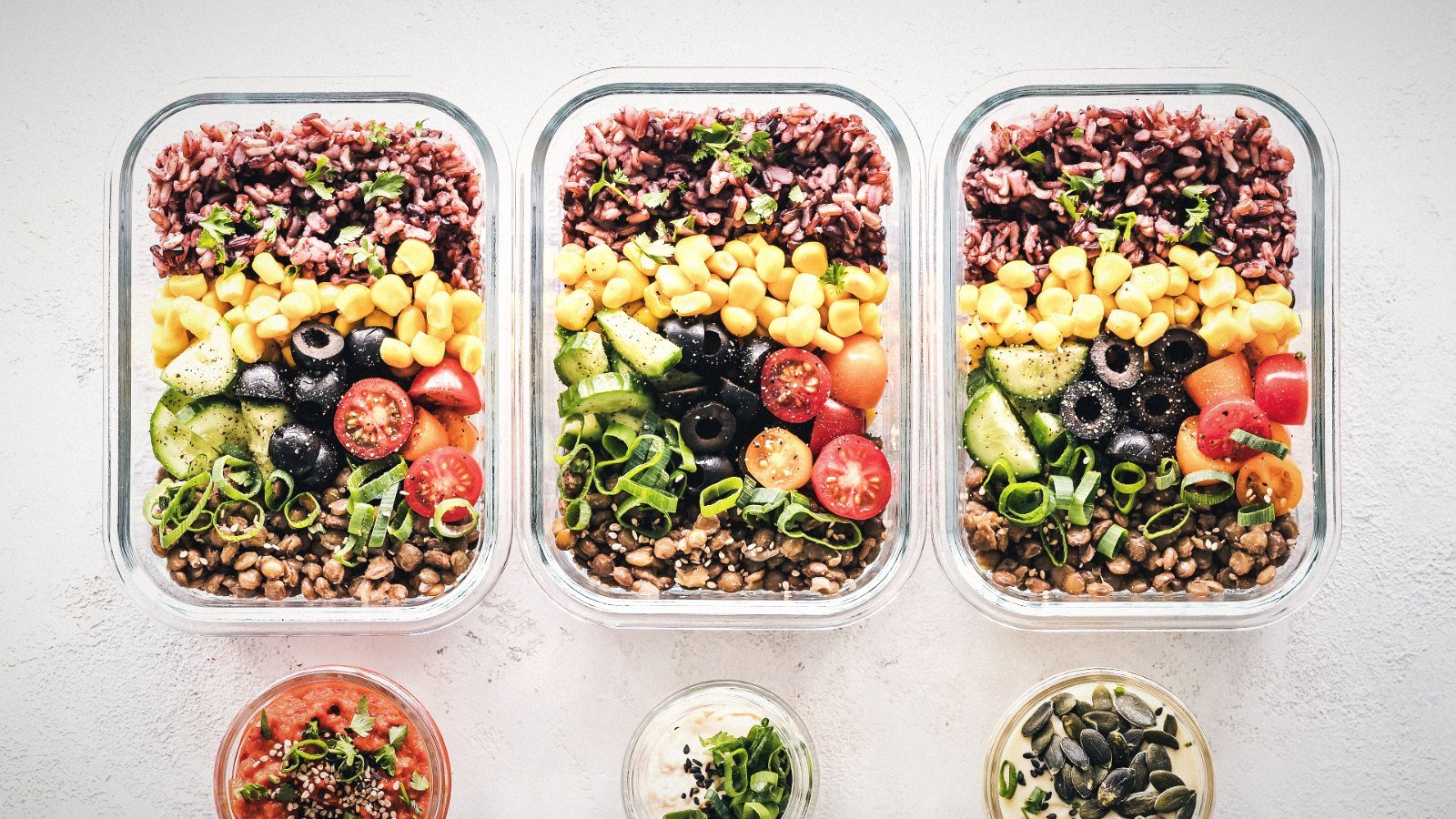
The evidence points to a moderate, consistent window, protein-forward meals and strength training, not an extreme fast.
- Start at 12 hours. Stop eating after dinner and push breakfast back until 12 hours have passed. Extend to 14, then 16 hours only if it feels sustainable.
- Anchor the window to your shift, not the clock. On day shifts, a window that closes by early evening fits the “eat earlier” evidence. On nights, eat your main meals early in the shift and avoid eating in the hours before post-call sleep.
- Aim for about 10 hours on shift weeks. That is the window that helped firefighters on 24-hour shifts, and it is realistic on call.
- Front-load protein. Build each meal around a protein source to help protect lean mass, and keep protein shakes or bars in your locker.
- Lift at least twice a week. The CDC recommends muscle-strengthening work 2 or more days a week; it matters more when you eat fewer meals.
- Keep fluids up. Water, black coffee and plain tea fit inside the fast. Watch for dehydration on long cases.
- Break the fast when you need to. If you feel lightheaded, shaky or foggy during a long case, eat. Staying sharp for your patient comes first.
My take: Intermittent fasting is a big part of what works for me. It keeps my eating simple and intentional: I eat to meet my nutritional needs, not just because food is in the break room. Paired with meal prep (chicken, tuna, rice, potatoes and sweet potatoes, plus protein shakes and bars), it removes a whole category of decisions from my day. The research tells me the benefit is mostly eating less and eating on purpose, not a metabolic trick, and that is fine with me. It is my approach, not a prescription, so talk to your own doctor before trying it.
Pair this with our night shift sleep guide and our guide to staying fit on a clinician’s schedule.
FAQ
Is intermittent fasting better than a regular calorie-controlled diet?
For weight, usually not by much. In the 12-month NEJM trial, adding an eating window to calorie restriction made no significant difference. Pick the approach you can sustain.
Does 16:8 put you in ketosis?
Rarely in a meaningful way. The metabolic switch to ketones is estimated at 12 to 36 hours, depending on glycogen stores, so a 16-hour fast sits at the early edge.
Will I lose muscle?
You may. TREAT found proportionally more lean-mass loss with 16:8. Eating enough protein and doing resistance training are the best-supported defenses.
Is it safe on night shifts?
A 10-hour window was feasible and beneficial for firefighters on 24-hour shifts. Keep the window consistent, eat earlier in the shift, and break the fast if you feel unwell at work.
Does coffee break a fast?
Black coffee and plain tea are generally considered compatible with fasting because they have almost no calories. Cream, sugar and sweetened drinks are not.
Should I worry about the 2024 heart study?
It is a reason for caution, not alarm. It was an observational conference abstract based on two days of self-reported diet and was not peer reviewed.
Sources
- Anton et al., “Flipping the Metabolic Switch,” Obesity, 2017
- Rothman et al., hepatic glycogen and gluconeogenesis in fasting humans, summarized in an Endocrine Society review
- Exercise and β-hydroxybutyrate over a 36-hour fast, Medicine & Science in Sports & Exercise, 2021
- Sutton et al., early time-restricted feeding, Cell Metabolism, 2018 (abstract)
- Medscape summary of the TREAT trial, JAMA Internal Medicine, 2020
- REBEL EM review of Liu et al., NEJM, 2022
- Jamshed et al., early TRE trial, JAMA Internal Medicine, 2022
- Patikorn et al., umbrella review, JAMA Network Open, 2021
- Salk Institute, Healthy Heroes firefighter trial, 2022
- American Heart Association newsroom, 2024 eating-window abstract
- Johns Hopkins Medicine, intermittent fasting overview
- Cleveland Clinic Journal of Medicine, fasting in patients with diabetes
- CDC, physical activity guidelines for adults
General information, not medical advice. Everything here reflects my personal views and opinions, based on my own experience and research. Talk to your doctor before changing how you eat, especially if you take medication or have a medical condition.
Image credits: Photo: andrea di anddante / Wikimedia Commons, CC0 · Color edited by The Gas Locker; Photo: Joaquin G., CRNA / The Gas Locker; Photo: Ella Olsson / Wikimedia Commons, CC BY 2.0 · Color edited by The Gas Locker.