
Contains affiliate links · Details
A 12-hour shift in the OR is hard on your feet in a way most shoe reviews don’t account for. You’re not walking a hospital floor all day. You’re standing in one spot at the head of the bed for hours, on hard tile that can turn slick with irrigation fluid in seconds.
So the best OR shoe does three jobs: grips a wet floor, wipes clean after a messy case, and cushions you while you stand still. These six picks do that well, at a range of prices.
Key takeaways
- The best OR shoe grips a wet floor, wipes clean after a messy case and cushions you while you stand still.
- Best overall: the Hoka Bondi SR, for maximum cushion with a slip-resistant, wipe-clean build.
- Clogs like the Dansko Professional ease long standing, but check your facility’s open-heel rule first.
- Keep two pairs in rotation, and replace a pair when the cushion feels flat or the tread wears smooth.
Last reviewed Nov 2026 · Written by a practicing CRNA
My take: My own setup is simple. I wear Crocs for night cases because nothing slips on faster at 2 a.m., and I run in the Brooks Ghost. On the longest cases I wanted more cushion. That’s what sent me looking for better options, and this guide is what I found.
Thinking about Crocs? Are Crocs comfortable for 12-hour shifts? Our full take →
Quick picks
- Best overall: Hoka Bondi SR
- Best clog: Dansko Professional
- Best for messy cases: Clove Classic
- Best running-shoe feel: Brooks Ghost Max
- Best for wide feet: New Balance 880
- Best budget: Crocs On The Clock
- Best for women: Hoka Bondi SR (women’s), see the women’s picks
Which shoe for which job
| Pick | Best for | Watch out for |
|---|---|---|
| Hoka Bondi SR | Most cushion; long cases standing still | Chunky look |
| Dansko Professional | Clog fans; rocker sole for long standing | Open heel isn’t allowed everywhere |
| Clove Classic | Messy cases: trauma, OB, ortho | Less cushion than the Bondi |
| Brooks Ghost Max | Runners; cleaner cases, pre-op, PACU | Mesh soaks up fluids |
| New Balance 880 | Wide or narrow feet | Mesh isn’t fluid-resistant |
| Crocs On The Clock | Budget backup pair; nights | Less support than the premium picks |
What to look for in an OR shoe
- Slip resistance. OR floors get wet fast, from irrigation, blood and spilled prep. Look for shoes labeled slip-resistant (SR) or tested to an ASTM slip standard. Many facilities require it.
- An upper that wipes clean. Running-shoe mesh soaks up whatever lands on it. Leather or coated uppers let you wipe down after a messy case.
- Cushion for standing still. Anesthesia work means hours in one spot at the head of the bed. A soft, wide base matters more than the responsive bounce runners want.
- A closed toe. Sharps and dropped equipment are real hazards. If you like clogs, check whether your facility allows an open heel.
- A pair that stays at work. Keep your OR shoes in your locker instead of wearing them in from the parking lot.
- Two pairs in rotation. Alternating gives each pair time to dry out and rebound. Replace a pair when the cushion feels flat or the tread wears smooth.
What the OR rules actually say about shoes
There’s no single national OR shoe. The rules come from two places:
- AORN, the perioperative nurses’ association, says to wear clean shoes in semi-restricted and restricted areas, wear protective footwear that meets your facility’s safety rules, and put on fluid-resistant shoe covers or boots when you expect heavy contamination. Take the covers off right after the case, then clean your hands.
- OSHA requires protective footwear wherever there’s a risk of foot injury, and your employer decides what that means through a hazard assessment.
That’s why the details (open heels, holes, slip ratings) vary from hospital to hospital. Your facility’s attire policy is the final word.
The full reviews
Best overall
Hoka Bondi SR
The Bondi is Hoka’s most cushioned everyday shoe, and the SR version adapts it for work. It adds a slip-resistant outsole and a leather upper that resists fluid and wipes clean. For long cases where you barely move, that thick, wide midsole is exactly what tired feet want.
Pros
- Maximum cushioning
- Slip-resistant outsole
- Leather upper wipes clean
Cons
- One of the priciest picks
- Chunky look isn’t for everyone
Best for: anyone who wants the most cushion possible and needs a shoe that meets slip-resistant rules.
My take: I haven’t worn the Bondi SR yet, and it’s next on my list. On paper it fixes exactly what my Crocs miss on long cases: far more cushion, with the same wipe-clean convenience.
Best clog
Dansko Professional
Walk into almost any OR and you’ll see these. The Professional has a contoured footbed and a tall rocker-bottom sole that rolls you forward, which takes pressure off the balls of your feet during long stretches of standing. If you want a little more room in the toe or a lighter clog, look at the Dansko XP 2.0.
Pros
- Rocker sole eases long standing
- Built to last
- Slips on and off in seconds
Cons
- Open heel isn’t allowed everywhere
- The rocker takes getting used to
Best for: clog loyalists and anyone whose facility allows an open heel.
My take: I haven’t gone the clog route myself. I get the appeal, since I like a shoe I can step right into, but I’d check my facility’s open-heel rule before buying.
Best for messy cases
Clove Classic
Clove makes shoes specifically for healthcare workers, and it shows. The Classic has a fluid-resistant upper that wipes clean in one pass, a laceless slip-on design and a dual-density support system. It looks like a normal sneaker, not a work shoe.
Pros
- Fluid-resistant, wipe-clean upper
- No laces to get dirty
- Clean sneaker look
Cons
- Less cushion than a max-cushion shoe like the Bondi
- Full price is high; wait for a sale
Best for: trauma, OB and ortho rooms, or anyone who wants easy cleanup above all.
My take: I haven’t tested these yet. If I worked more trauma or OB cases, this is the first shoe I’d try, because easy cleanup matters most in those rooms.
Best running-shoe feel
Brooks Ghost Max
If you already love running shoes, this is the one to try at work. The Ghost Max uses Brooks’ soft DNA Loft foam in a thick, stable platform, and it carries the American Podiatric Medical Association’s Seal of Acceptance.
Pros
- Soft but stable cushioning
- APMA Seal of Acceptance
- Works for the gym too
Cons
- Mesh upper soaks up fluids
- Check your facility’s slip-resistance rules
Best for: cleaner cases, pre-op and PACU days, and runners who want the same feel at work.
My take: I run in the regular Brooks Ghost, so I know how Brooks’ cushioning feels. The Ghost Max is the same idea with more foam underfoot. It’s my pick if you want your running-shoe comfort at work, but because of the mesh I’d save it for cleaner cases.
Best for wide feet
New Balance 880
Most shoes on this list come in one or two widths. The 880 comes in several, so wide or narrow feet can get a real fit instead of sizing up. It’s a steady, cushioned daily trainer that’s quiet on hard hospital floors, and it also holds the APMA Seal.
Pros
- Multiple width options
- Quiet on hard floors
- APMA Seal of Acceptance
Cons
- Mesh upper isn’t fluid-resistant
- Less plush than the Bondi or Ghost Max
Best for: wide or narrow feet that never fit standard sizes.
My take: I haven’t worn the 880. I’d reach for it if standard widths never fit you right; a proper width beats sizing up every time.
Best budget
Crocs On The Clock
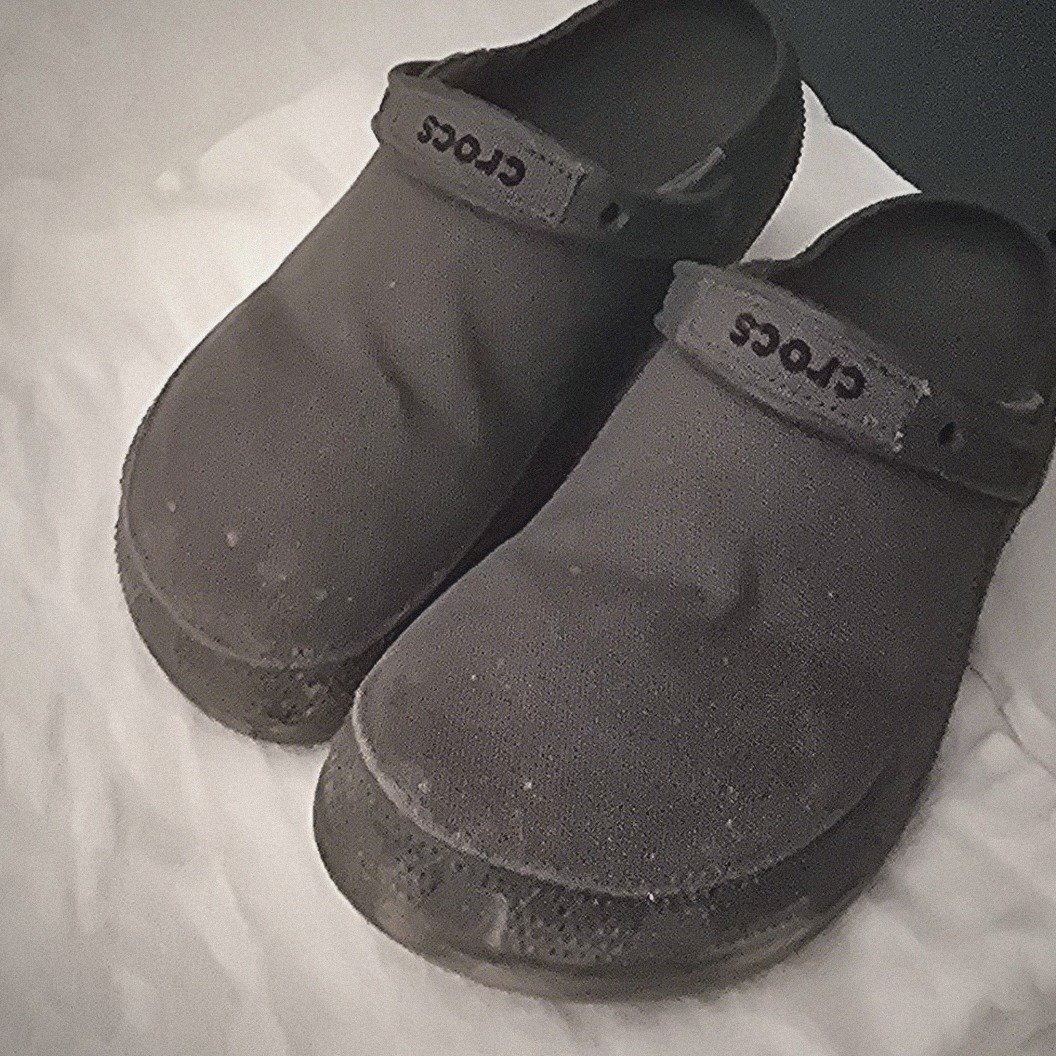
These aren’t the holey Crocs from the beach. The On The Clock has a closed top, a slip-resistant tread and a roomy toe box, and you can rinse it off in the sink. At around a third of the price of the other picks, it’s an easy backup pair for your locker.
Pros
- Cheapest pick by far
- Closed top and slip-resistant
- Rinses clean
Cons
- Less support than the premium picks
- Not everyone likes the look
Best for: students, new grads and a second pair to keep in your locker.
My take: Crocs are what I actually wear for night cases. They’re the fastest shoe to slip on when you get called in, and they rinse clean in seconds. Whether they hold up for a full 12 hours is its own question, and I answer it here: Are Crocs comfortable for 12-hour shifts?
Best shoes for women on 12-hour shifts
Most “nursing shoe” lists are really lists of women’s shoes. So here’s the short version for women: these three come in women’s-specific fits and widths. They cover the cushion, slip-resistance and wipe-clean needs of a long OR day.
Best overall for women
Hoka Bondi SR (women’s)
The same max-cushion work shoe from our top pick, built on a women’s last. It has a water-resistant leather upper and a slip-resistant outsole, so it handles a wet OR floor and a long stand at the head of the bed.
Best for messy cases
Clove Women’s Classic
Built for healthcare from the start. You clean it with the same wipes you use on the job, and every Clove model is certified slip-resistant. There’s a Classic Wide if the regular runs narrow on you.
Best for swelling feet
Brooks Ghost Max 3 (women’s)
The newest Ghost Max gives the forefoot more room, which feels better at hour ten, when feet are at their biggest. The rocker sole rolls you forward on hard floors. The mesh soaks up fluid, so save it for cleaner rooms.
Fit tips that matter more than the brand:
- Shop late in the day. Feet swell over a long shift, so a shoe that fits at 7 a.m. can pinch by 5 p.m.
- Try a wide before sizing up. A wide width keeps the heel snug; a bigger size just lets it slip.
- Need extra-wide? The regular Hoka Bondi 9 comes in women’s wide and extra wide. It has a mesh upper, so it’s for cleaner cases.
Night shift and hard floors
Nights change the job: fewer staff, more walking between rooms, and a 2 a.m. call where you need to be in shoes in seconds.
- Easy on, easy off. A slip-on like the Clove, or a clog, wins when you’re called in from the call room.
- More cushion, not less. Hard floors feel harder by morning. Max-cushion picks like the Bondi SR or Ghost Max take the edge off.
- Thinking clogs for nights? Are Crocs comfortable for 12-hour shifts? covers what works and what your dress code may say.
- Concrete all shift? Cushion matters more than bounce. A wide, soft base (Bondi SR, Ghost Max) or a rocker-sole clog (Dansko) spreads the load better than a firm, flat sole.
- Swap pairs mid-week. Foam needs time to rebound. Rotating two pairs keeps the cushion from going flat as fast.
How we chose
We started with the shoes OR staff and nursing publications recommend most, then narrowed the list to shoes that grip wet floors, clean up easily and stay comfortable during long stretches of standing. For transparency: I wear Crocs at work and run in the Brooks Ghost. The other picks come from research, and I’ll update this guide as I test them.
FAQ
What are the best shoes for women working 12-hour shifts?
For the OR, a slip-resistant shoe with real cushion and an upper you can wipe clean. The Hoka Bondi SR (women’s) is our top pick, the Clove Women’s Classic is best for messy rooms, and the Brooks Ghost Max 3 suits feet that swell. Shop late in the day, and try a wide width before sizing up.
What shoes do OR nurses and surgeons wear?
Mostly two camps: clogs like the Dansko Professional, and cushioned sneakers with slip-resistant soles like the Hoka Bondi SR or Clove. Many keep one pair that never leaves the hospital.
Are sneakers allowed in the OR?
Usually, yes, if they’re clean, closed and meet your facility’s safety rules. Mesh running shoes are often allowed but soak up fluids, so wear shoe covers for messy cases or pick a wipe-clean upper.
What are the best shoes for standing on concrete for 12 hours?
Max-cushion shoes with a wide base, like the Hoka Bondi SR or Brooks Ghost Max, or a rocker-sole clog like the Dansko Professional. Rotate two pairs and add compression socks for the longest days.
Should I size up for 12-hour shifts?
Feet swell over a long shift, so try shoes on later in the day. You want a thumb’s width at the toe and a heel that doesn’t slip. If one width never fits, the New Balance 880 comes in several.
Are clogs allowed in the OR?
It depends on your facility. Many allow them, but some require a closed heel. Check your policy before buying.
Can I just wear running shoes?
You can, and many people do. The catch is the mesh upper, which soaks up fluids. If your cases get messy, choose a fluid-resistant shoe or keep a second pair on hand.
How often should I replace my work shoes?
When the cushion feels flat or the tread wears smooth. Rotating two pairs helps both last longer.
Should I wear compression socks too?
Plenty of OR staff pair good shoes with compression socks for long days. See our guide to the best compression socks for long cases.
Should I wear my OR shoes outside the hospital?
It’s best not to. Keep a pair that stays at work so you’re not tracking outside dirt into the OR.
The Gas Locker may earn a commission when you buy through links on this page. It doesn’t change what we recommend. General information, not medical advice. If you have ongoing foot, knee or back pain, see a podiatrist or your doctor. Image credits: Photo: Joachim G.