

Every CRNA has a version of the same bag. A stethoscope tangled around a phone charger, three pens that may or may not work, a notebook from two jobs ago, and a laptop that only comes out for CE.
It works, until the morning it doesn’t.
This is the gear that rides with you to every site: what’s worth upgrading, what’s fine cheap, and what to look for in each.
The short answer
Get a backpack with a padded laptop sleeve and a wipeable lining, a stethoscope you can actually hear in a loud OR, pens with ink that won’t smear, a small notebook that survives a spill, and a light laptop with all-day battery. Then let your phone hold the codes and dates you can’t lose. You don’t need the most expensive version of any of it.
Start with the one in your pocket: GasRate
The most important piece of the kit isn’t in your bag. It’s your phone, and the app our team at The Gas Locker is building for it.
GasRate by The Gas Locker holds the stuff that usually ends up scattered across a notebook, your texts and the back of a badge. Take the tour:
Your shift, in one app
Keep the notebook for scribbles. The codes and dates you can't afford to lose belong somewhere locked and searchable.
Bags: the one that carries everything
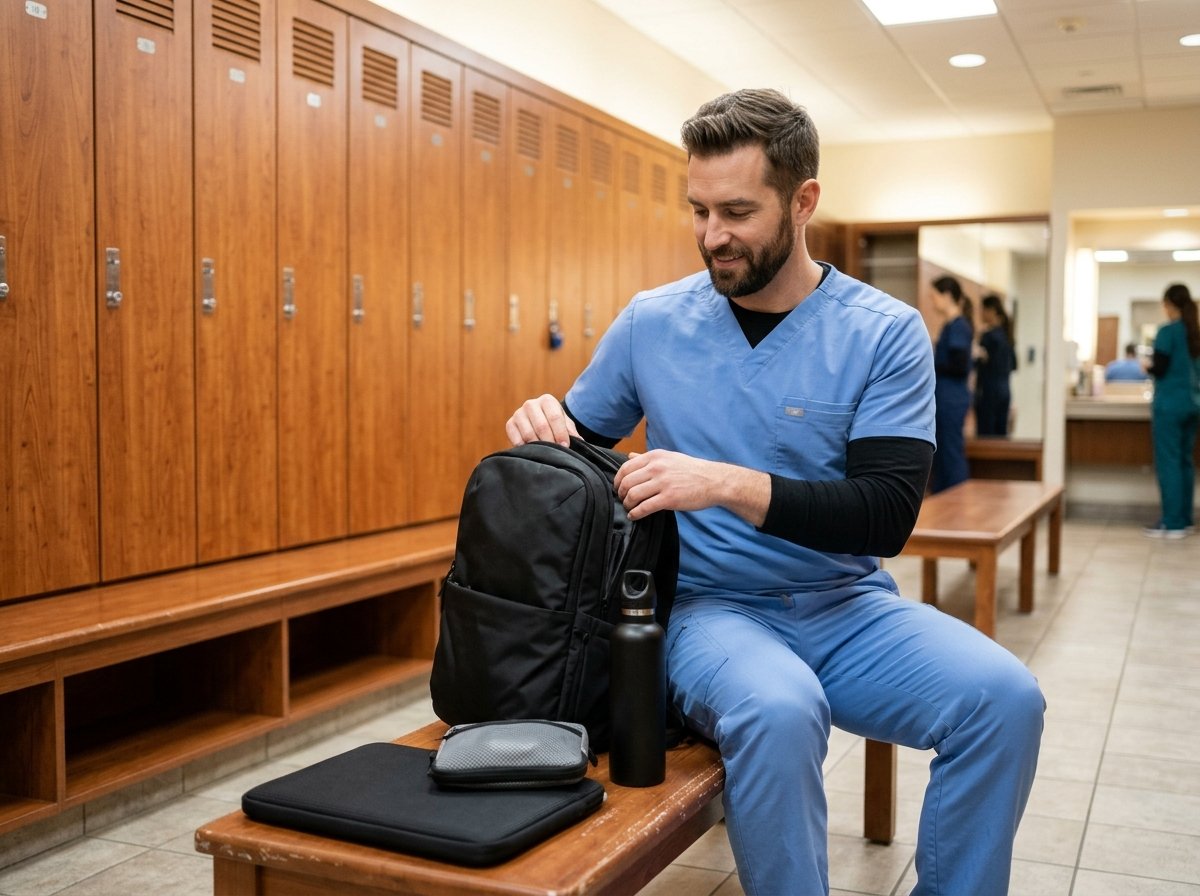
A good work bag does three things: protects your laptop, keeps clean things away from dirty things, and wipes down at the end of a shift.
Bellroy Classic Backpack
~$80–$180Clean, low-profile backpack with a padded sleeve. Looks as right at a credentialing meeting as in the locker room.
MATEIN Nurse Backpack
~$40–$70Built for clinical work, with pockets for small gear and a USB port for your charger.
BÉIS Commuter Tote
~$100–$175Padded laptop pocket up to 15.6 in. The pick if you go car to locker and travel for locums.
JanSport SuperBreak Plus
~$40–$70Simple, tough and cheap, with a laptop sleeve. Hard to beat for the price.
Sources: Advantis Medical for features and price ranges; Altitude Sports for Bellroy's size, laptop fit and warranty.
In plain terms: a backpack beats a tote if you walk from far parking or between buildings, since it spreads the weight. A tote is easier if you mostly go car to locker.
- A separate laptop sleeve. Your laptop should never share a pocket with a lunch container.
- A wipeable or washable lining. Bags go on floors. Floors in hospitals are not clean.
- One small pocket you can find by feel for badge, keys and earbuds.
- A luggage sleeve if you travel for locums or 1099 work.
Stethoscopes: one you can hear in a loud OR
In anesthesia, the stethoscope earns its keep at a few key moments: breath sounds after intubation, a quick listen when the numbers change. The catch is that you're often listening over suction, alarms and conversation.
Littmann Classic III
VariesTunable diaphragm on both sides and latex-free tubing that resists stains. The dependable default.
Littmann Cardiology IV
VariesDual-lumen tubing cuts rubbing noise, and it picks up subtler sounds. The step up.
Eko CORE 500
$389Digital, with a built-in 3-lead ECG and up to 60 hours per charge. For a noisy room, or ears that aren't what they were.
Sources: Aspen Healthcare for Classic III; Stethoscope.com for the Classic III vs. Cardiology IV comparison; Eko Health for CORE 500.
Watch out for: Eko's AI features (murmur and AFib flags) need a paid Eko+ membership after a 14-day trial, about $120 a year. Basic listening and recording are free.
Keep it clean: wipe the diaphragm and earpieces between patients, and keep it out of the bottom of your bag.
Pens: ink that stays put
Pens walk off. That's a law of the OR. So the goal isn't a fancy pen; it's a good pen you buy by the dozen.
uni-ball 207
Varies; sold in packsPigment "Super Ink" that resists water, fading and alteration, with a rubber grip and a click instead of a cap (uni-ball).
In plain terms: a retractable pen won't lose its cap or mark your scrub pocket. Pigment ink matters on paper that might meet a splash. And a medium 0.7 mm tip writes cleanly on carbonless forms and labels.
- Carry three. One for you, one to lend, one that disappears.
- Clip them inside the pocket, not on the edge, so they don't fall when you lean over a patient.
- Pick one ink color so your notes look the same everywhere.
Notebooks: small, tough, pocket-sized

A pocket notebook holds what you don't want to lose between cases: a surgeon's preferences, a to-do for after call, contacts for a new site. Never patient names or identifiers; those stay in the chart.
Rite in the Rain
~$8Paper that doesn't turn to mush when wet. 5 x 3.5 in., for anyone who's lost a notebook to a spill.
Field Notes memo book
~$13 for 3Thin and light at 3.5 x 5.5 in. Better for a scrub top pocket.
Sources: REI for Rite in the Rain; MoCA Store for Field Notes.
One catch: on wet Rite in the Rain paper, regular gel ink beads up. Use a pencil or an all-weather pen when it's wet; ballpoints and markers work when it's dry.
Tip: if you work several sites, give each one its own page, so contacts are in one place on day one. For door codes and logins, a locked app is safer than paper (more on that below).
Laptops: for everything after the shift
The laptop is for the work around the work: CE courses, credentialing paperwork, billing and invoices if you're 1099, and studying.
MacBook Air M5
from $1,299The all-around pick. Runs CE, documents and spreadsheets without breaking a sweat.
MacBook Neo
from $699Apple's budget laptop. Plenty for CE, email and billing.
HP Omnibook Ultra
Varies by setupThe Windows pick, with very long battery life.
Source: Engadget, Best laptops for 2026 (updated Aug 31, 2026).
In plain terms: battery life matters more than speed for what most CRNAs do on a laptop.
Watch out for: keep patient information off your personal laptop. Follow your facility's rules for remote charting, and use their approved system, not your own files. Going 1099? Our 1099 CRNA starter guide covers the business side of the laptop work.
How to pack it
A simple order keeps the clean things clean and the important things findable:
- Laptop in the padded sleeve against your back.
- Stethoscope in its own pouch or a zip pocket, never loose at the bottom.
- Notebook and pens in a front pocket you can reach without opening the main compartment.
- Badge, keys and earbuds in the small top pocket.
- Food and drinks in a separate insulated pouch, so a leak never reaches your laptop.
Once a week, empty it out, wipe it down and restock pens. Five minutes, and you stop carrying around last month's receipts.
FAQ
What's the best bag for a CRNA?
A backpack with a padded laptop sleeve, a wipeable lining and a small grab pocket. Pick a tote if you mostly go car to locker.
Do CRNAs need an expensive stethoscope?
Not necessarily. A Classic III covers most needs. Step up to a Cardiology IV or an amplified digital stethoscope if you struggle to hear in a loud OR.
What pen is best for charting?
A retractable pen with pigment ink, like the uni-ball 207. It resists water and fading, and no cap means no ink on your scrubs.
Can I write in a notebook if it gets wet?
With Rite in the Rain paper, yes, using a pencil or all-weather pen. Regular gel ink won't stick to wet pages.
Which laptop is best for CE and billing?
Any light laptop with long battery life. The MacBook Air M5 is the all-around pick; the MacBook Neo is the budget one.
Where should I keep door codes and site logins?
Not on paper or in your texts. A locked app is safer. GasRate's Sites tab keeps them behind Face ID; it's coming soon to Google Play, with founding member spots on our Tools page.
Sources
- Advantis Medical: 15 Best Nursing Bags for Every Shift
- Altitude Sports: Bellroy Classic Backpack (Second Edition)
- Aspen Healthcare: 3M Littmann Classic III Stethoscope
- Stethoscope.com: Classic III vs. Cardiology IV
- Eko Health: CORE 500 Digital Stethoscope
- uni-ball: 207 Gel Pens
- REI: Rite in the Rain Soft Cover Notebook
- MoCA Store: Field Notes Original Kraft Memo Books
- Engadget: Best laptops for 2026
No affiliate links; no brand paid for or reviewed this post. GasRate is built by The Gas Locker's team; app screens show sample data. Prices were checked in October 2026 and change often. Follow your facility's policies on patient information and personal devices. Cover and images: AI-generated via Google Gemini.